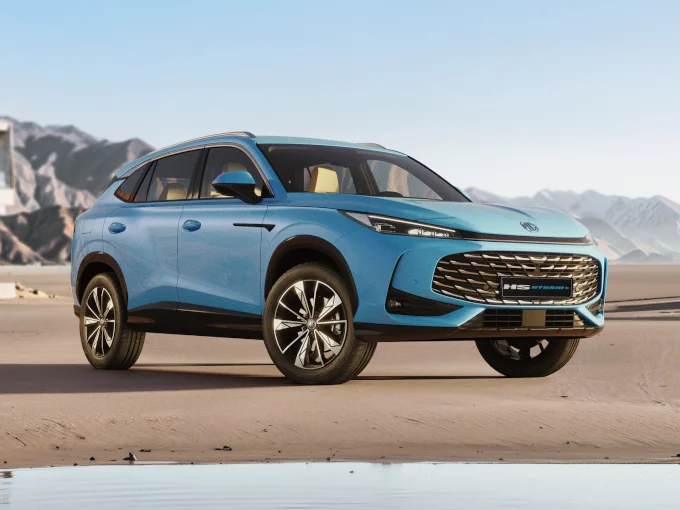
What Is an Electric Car? Types, Benefits & How They Work
The roads are changing. The way we power our journeys is being redefined — faster, cleaner, and more intelligently than ever before. The electric car is no longer a concept of the future. It is a present reality — and adoption across Qatar is growing faster than most drivers expected. MG Motor, with a heritage built on over a century of driving passion, has built one of the region's most complete electrified lineups — covering pure electric, plug-in hybrid, and hybrid options for drivers across Qatar.
The electric cars revolution is reshaping how millions of drivers in Qatar think about mobility. Whether you are considering your first electric car, researching the best electric car for 2026 in the Gulf, or simply exploring the difference between a full BEV and a plug-in hybrid — this guide answers every question. Directly. Clearly. Without the jargon.
Key Takeaways
- A Battery Electric Vehicle (BEV) runs purely on electricity — zero emissions, zero fuel costs, and instant torque on demand.
- A Plug-In Hybrid Electric Vehicle (PHEV) combines a rechargeable electric battery with a petrol engine, offering the best of both worlds for drivers making the transition.
- Electric motors deliver full torque from zero RPM — unlike combustion engines — resulting in a more responsive, dynamic driving feel from the very first moment.
- EV charging infrastructure across the UAE, Saudi Arabia, Qatar, Kuwait, Bahrain, and Oman is expanding rapidly — public fast-charging networks are growing year on year, making range confidence a practical reality for everyday drivers across the Gulf.
- Total cost of ownership for electric vehicles is increasingly competitive with petrol cars when fuel savings, lower maintenance requirements, and government incentives are factored in.
What Is an Electric Car?
An electric car is a vehicle powered entirely — or primarily — by one or more electric motors, drawing energy from a rechargeable battery pack rather than burning petrol or diesel. Electric vehicles produce zero direct tailpipe emissions, deliver instant torque from the moment you press the accelerator, and cost significantly less to operate per kilometre than combustion-engine vehicles.
They represent the most significant shift in personal mobility in over a hundred years — MG is part of that shift across Qatar with a full lineup of pure electric and plug-in hybrid models, from the accessible MG 4 Electric to the performance-driven MG Cyberster. For drivers across Qatar, the UAE, Saudi Arabia, and the wider Gulf region, this electric cars revolution is no longer a distant shift — it is already here.
The History of Electric Cars: A Century-Old Revolution
While electric vehicles (EVs) feel like a modern breakthrough, they actually ruled the roads long before internal combustion engines took over. In the early 20th century, electric cars held one of the largest shares of the automotive market. They were quiet, clean, and didn't require the dangerous hand-cranks of early petrol cars. In fact, the first vehicle to break the 100 km/h speed barrier in 1899 was electric.
However, the discovery of cheap crude oil and the mass production of the Ford Model T caused a century-long detour toward petrol.
Today, the story has come full circle. The electric cars revolution is not a new trend — it is a return to a proven concept, now powered by advanced lithium-ion technology, with next-generation solid-state batteries already on the horizon. For a brand like MG Motor, with over a century of British motoring heritage dating back to 1924, the transition into the electric era is a natural progression — connecting a long history of driver-focused vehicles with the demands of a zero-emission future.
How Does an Electric Car Work?
Electric cars operate on a fundamentally different principle to combustion vehicles. No ignition delay. No gearbox hesitation. No engine warm-up. Just immediate, precise, smooth energy conversion from battery to motion.
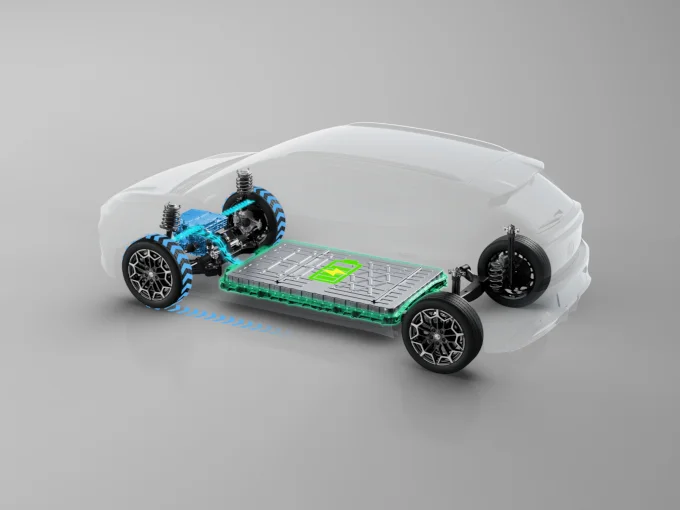
The Battery Pack
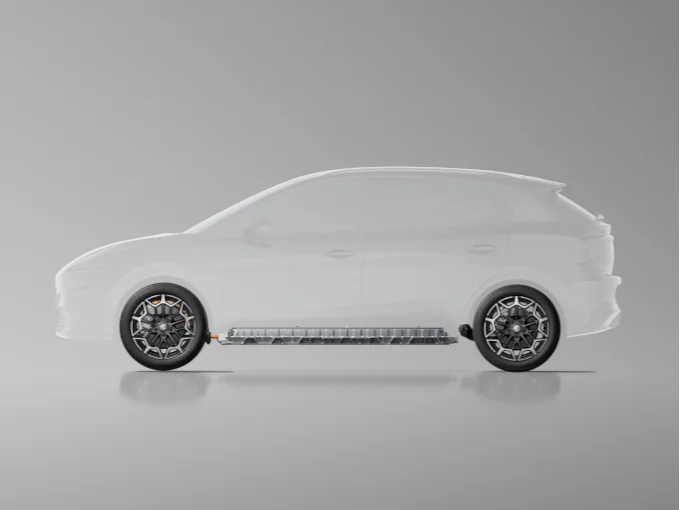
The battery pack is the core of every electric vehicle. Measured in kilowatt-hours (kWh), it stores electrical energy and releases it to the motor on demand. A higher kWh capacity generally means a greater driving range per charge. Battery technology has advanced dramatically in recent years — one of the defining forces behind the electric cars revolution in the Gulf. Modern EV batteries are safer, denser, and more durable than ever, with thermal management systems specifically engineered for high-temperature environments like Qatar. Battery warranties from leading manufacturers now commonly extend to 8 years or more, giving owners long-term confidence. The MG 4 Electric, for example, offers a 77 kWh battery in its most popular configuration — enough for up to 530 km of range on a single charge.
The Electric Motor
Where a combustion engine builds torque gradually as RPM climbs, an electric motor delivers its full torque output from zero RPM — the instant you press the accelerator. This produces the characteristic surge of acceleration every EV driver experiences with immediate surprise. There are no gear changes in the traditional sense — power delivery is linear, smooth, and always ready. The MG 4 Electric delivers instant torque from the moment you press the accelerator, while the performance-focused MG Cyberster takes that further still — a dual-motor all-wheel-drive electric sports car engineered for drivers who demand the most from their electric experience.
Regenerative Braking
One of the most innovative features in electric vehicles is regenerative braking. When the driver lifts off the accelerator or applies the brakes, the electric motor reverses its function — becoming a generator that converts kinetic energy back into electrical energy stored in the battery. This meaningfully extends real-world range and reduces wear on physical brake components. Most modern EVs offer adjustable regenerative braking intensity, giving drivers direct control over how aggressively the system recovers energy on every journey.
Charging: AC vs DC
Electric vehicles can be charged in two primary ways. AC charging uses the vehicle's onboard charger and is typically used for overnight home charging — slower but perfectly suited for topping up while parked. DC rapid charging bypasses the onboard charger entirely, delivering high-voltage power directly to the battery pack. DC rapid chargers are found at public stations and dramatically reduce charging time — advanced systems can charge a large battery to 80% in under 40 minutes. Understanding which charger type your vehicle supports is a key part of planning EV ownership.
Types of Electric Cars: BEV, PHEV, and Hybrid Explained
Not all electric cars are the same. The terminology matters — and choosing the right type depends entirely on how and where you drive.
Battery Electric Vehicle (BEV)
A BEV runs exclusively on electrical power. No petrol engine, no exhaust, no fuel tank. All energy comes from the battery, which is recharged via an external source. BEVs are the purest expression of the electric revolution — zero tailpipe emissions, the lowest running costs, and the most direct, engaging driving experience. They are ideal for drivers with access to home charging and whose regular journeys fall within the vehicle's range. MG offers two compelling BEV choices: the MG 4 Electric — a distinctive, accessible pure-electric hatchback built on a dedicated EV platform with up to 530 km of range — and the MG Cyberster, MG's flagship pure electric roadster that fuses a century of iconic British heritage with state-of-the-art performance technology.
Plug-In Hybrid Electric Vehicle (PHEV)
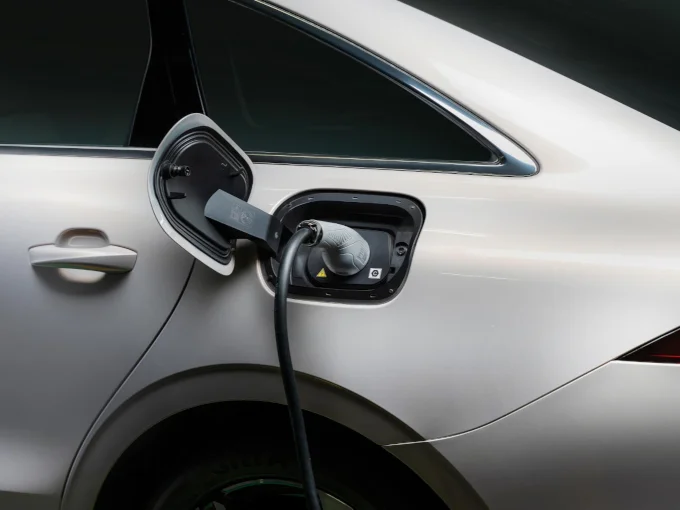
A PHEV combines a rechargeable battery and electric motor with a conventional petrol engine. The electric system handles short-range daily driving and the petrol engine activates automatically for longer journeys — eliminating range anxiety entirely. PHEVs are the most practical entry point into electric driving for those not yet ready to commit fully to a BEV. The MG 8 PHEV represents MG's intelligent PHEV approach — offering genuine electric-only driving for daily use, with the security of petrol for extended travel.
Mild Hybrid and Full Hybrid (Non-Plug-In)
Traditional hybrids use a small electric motor to assist the combustion engine and recover energy through regenerative braking — but cannot be plugged in and do not offer meaningful electric-only driving. While more efficient than pure petrol vehicles, they represent a smaller step compared to BEVs or PHEVs. MG's strategic focus is firmly on PHEVs and full BEVs — the technologies that make a genuine, measurable difference to both emissions and long-term running costs.
What Are the Benefits of Electric Cars?
The reasons to go electric extend well beyond environmental responsibility. For Qatari drivers specifically, the practical and financial advantages are direct and measurable.
Lower Running Costs
Electricity costs per kilometre are consistently lower than petrol across the region. An electric drivetrain is also mechanically simpler — fewer moving parts means fewer service intervals, no engine oil changes, and reduced brake wear thanks to regenerative braking. Over a 5-year ownership period, the total cost of running an EV frequently outperforms a comparable petrol vehicle when fuel and maintenance savings are properly calculated. For drivers wondering about electric car costs in Qatar, Saudi Arabia, the UAE, or Kuwait, the electricity tariff per kilometre is consistently a fraction of the equivalent petrol spend — making the switch financially compelling from day one.
Instant Performance
Electric motors respond in milliseconds. The absence of a traditional gearbox means power is always available, linear, and precisely controllable. This produces a driving dynamic that is both more relaxed in daily traffic and more engaging when the road opens up. Whether it is the everyday responsiveness of the MG 4 Electric or the full performance potential of the MG Cyberster, electric driving delivers a quality of response no combustion engine can replicate.
Zero Tailpipe Emissions
BEVs produce no direct CO2, no NOx, and no particulate emissions at the point of driving. This directly improves urban air quality and aligns with the sustainability commitments of every GCC government — including UAE Net Zero 2050 and Saudi Vision 2030. Choosing an electric vehicle is a tangible, immediate contribution to a cleaner regional future.
Quiet, Refined Driving Experience
Electric drivetrains are inherently quieter than combustion engines. Without the noise, vibration, and mechanical harshness of a running engine, the cabin environment in an EV is significantly more serene — particularly in urban traffic. This is a meaningful, everyday quality-of-life improvement that every EV driver notices from the very first journey.
How Fast Is the Electric Cars Revolution Growing in the Middle East?
The GCC has emerged as one of the world's fastest-growing EV markets — with penetration doubling from 2% to 4% in just twelve months, according to Roland Berger's EV Charging Index 2025. The region sold 40,300 electric vehicles in 2024, forecast to reach 97,300 units by 2033. The UAE leads by volume with close to 24,000 units sold in 2024, while Saudi Arabia recorded a nearly tenfold increase in EV sales in the same year.
UAE Government Targets
The UAE's National Electric Vehicles Policy targets 50% of all vehicles on UAE roads to be electric or hybrid by 2050. Dubai has committed to 30% of government vehicle procurement being electric or hybrid by 2030, while Abu Dhabi is targeting up to 70,000 EV charging points by 2030 through the ADNOC-TAQA E2GO platform.
Saudi Arabia: Vision 2030
Under Vision 2030, Saudi Arabia has committed to 30% of all vehicles in Riyadh being electric by 2030, backed by over $50 billion in EV investment. The PIF-backed EVIQ is deploying 5,000 fast chargers across 1,000 locations nationwide by 2030. Consumer intent matches the ambition — 91% of GCC BEV owners plan to buy another electric vehicle, above the global average of 87%, according to Roland Berger's EV Charging Index 2025.
Electric Car Charging: A Practical Guide
Charging an electric vehicle is simpler than most first-time buyers expect. EV charging in Qatar and across the GCC is expanding rapidly — public DC fast-charging stations are now available at major malls, petrol station forecourts, highway rest stops, and workplaces in Doha, Dubai, Abu Dhabi, Riyadh, and Jeddah. The key is understanding the options and matching them to your daily routine.
| Charging Type | Power Level | Typical Time to 80–100% | Best Used For |
|---|---|---|---|
| Standard Home Socket (AC) | 2.3 kW | 24–48 hours | Emergency top-up only |
| Home Wall Box (AC) | 7–11 kW | 6–14 hours | Overnight home charging |
| Public AC Fast Charger | 22 kW | 3–6 hours | Daytime destination charging |
| Public DC Rapid Charger | 50–150 kW | 20–60 minutes (to 80%) | Long-distance top-up |
| Public DC Ultra-Rapid Charger | 150–350 kW | 10–30 minutes (to 80%) | High-performance EVs |
The most practical approach for most owners is overnight home charging via a dedicated wall box — arriving each morning with a full battery, no detour to a fuel station required. Public DC rapid chargers handle longer journeys and are now widely available across major GCC cities and highway networks.
BEV vs PHEV: Which Type of Electric Car Is Right for You?
Choosing between a full BEV and a PHEV depends on your daily driving patterns, access to home charging, and your readiness to embrace the technology fully.
| Factor | Battery Electric Vehicle (BEV) | Plug-In Hybrid (PHEV) |
|---|---|---|
| Daily Driving Range | 300–600+ km typical | 50–150 km electric-only |
| Charging Requirement | Regular charging essential | Can run on petrol if not charged |
| Long-Distance Travel | Requires planned charging stops | Petrol engine eliminates range concern |
| Tailpipe Emissions | Zero | Zero in EV mode; low in hybrid mode |
| Running Costs | Lowest of all vehicle types | Lower than petrol; higher than pure BEV |
| Ideal For | Urban commuters, home charging access | Mixed users, long-distance, first-time EV buyers |
| Best MG Example | MG 4 Electric, MG Cyberster | MG 8 PHEV |
Neither option is universally superior — the right choice is the one that fits your actual driving life. MG's electrified range covers both sides of this table with performance-driven precision.
Which MG Electric or Hybrid Is Right for Your Journey?
The region's driving environment — intense summer heat, long inter-city distances, expanding charging infrastructure, and dense urban traffic — creates a specific set of demands. MG has engineered its electrified lineup to meet every one of them.
Families
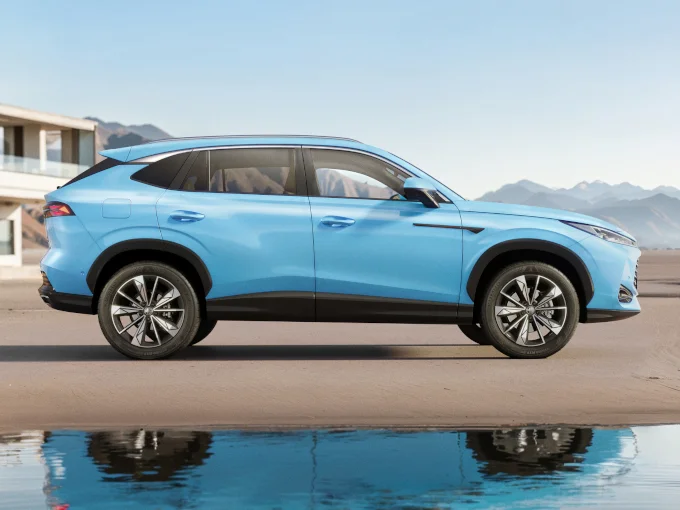
For families looking for a spacious hybrid SUV, MG's lineup offers the space, range, and technology to match every journey. A hybrid SUV delivers all of this — the electric motor assists the daily school run efficiently, while the petrol engine stands ready for weekend road trips and longer journeys. Advanced driver-assistance systems, multi-zone climate control, and class-leading warranties provide confidence for the whole family. The MG HS Hybrid+ is purpose-built for this driver — combining hybrid efficiency with the reassurance of strong combined range.
Daily Commuters
A commuter covering 60–120 km per day on a predictable urban route is the ideal BEV or PHEV candidate. Charging overnight at home means arriving at work with a full battery every morning — no fuel station detour, no running costs per kilometre. The MG 4 Electric is a compelling solution for this driver: a pure electric hatchback built from the ground up for electric driving, with up to 530 km of range, adaptive cruise control, and an EV-optimised platform that makes every commute as efficient as it is engaging. For those who need greater range flexibility, the MG 8 PHEV offers 125 km of electric-only daily driving with petrol backup for longer trips. Either way, the running cost advantage of electric driving in the Gulf makes this the most financially rational choice for the daily commuter.
First-Time Electric Car Buyers
The biggest barrier to EV adoption is unfamiliarity — not the technology itself. Many drivers across Qatar looking to buy their first electric car find that a PHEV removes every practical concern while delivering a genuine taste of electric driving. You build the habits of EV ownership — charging routines, regenerative braking, drive mode selection — without dependency on the charging network. Once confident, the MG 4 Electric offers a natural, accessible next step into full battery-electric driving: an intuitive, well-considered hatchback designed specifically for drivers entering the electric age for the first time.
Ready to Join the Electric Cars Revolution?
The electric cars revolution is not a trend — it is a permanent, accelerating transformation of how the world moves. Every major city in the Middle East is investing in charging infrastructure. Every government in the region has committed to sustainability targets that require the shift away from combustion engines. And every driver who has experienced an electric vehicle — the instant response, the quiet cabin, the lower running costs — tends to ask the same question: why didn't I switch sooner?
The transition in Qatar is being driven by infrastructure investment, government sustainability targets, and a growing number of drivers who are ready to make the switch. MG Motor has been building vehicles for over a century — and its current electrified lineup reflects that experience, from the MG 4 Electric to the MG Cyberster and the plug-in hybrid MG 8 PHEV. Every model is backed by class-leading warranty coverage and supported by MG's regional network of expert technicians.
The question is no longer whether to make the switch. The question is which MG electric journey is yours. Visit your nearest MG showroom, book a test drive, and let the drive decide.
Looking for more space? While this guide focuses on MG's electrified lineup, families needing three full rows can explore the MG RX9 — MG's 7-seater SUV, available across the UAE, Saudi Arabia, and the wider Gulf region.