Chinese Cars in Qatar: What Sets MG Apart? [2026]
Chinese car brands have become one of the fastest-growing segments in Qatar's automotive market, combining modern technology with increasingly competitive pricing. Among them, MG Motor has built a strong presence in Qatar by focusing on GCC-specific engineering - vehicles adapted to the high temperatures and long-distance driving conditions common across the Gulf. This guide looks at what buyers in Qatar should know about Chinese cars, and where MG stands out.
Key Takeaways
- Market Transformation: Chinese car brands are among the fastest-growing segments in Qatar, offering a mix of technology and design that increasingly competes with established global manufacturers.
- Regional Growth: MG Motor has established itself as one of the fastest-growing automotive brands in the GCC, recording strong year-on-year sales growth.
- Value Proposition: Many Chinese vehicles, including MG's range, include features as standard that are often reserved for higher trims elsewhere.
- GCC-Specific Engineering: Manufacturers increasingly test vehicles for extreme desert heat, prioritising cooling systems and air conditioning performance.
- Warranty Coverage: Extended warranties (up to 6 years from MG) have become a factor in building buyer confidence in Chinese-built vehicles.
- Growing NEV Adoption: A rising number of New Energy Vehicles are entering the region, reflecting the GCC's shift towards electrified mobility.
The Evolution of Chinese Cars in the GCC: From Value to Choice
The perception of cars from China has shifted significantly over the past few years. What was once viewed primarily as a budget-friendly alternative has evolved into a segment offering advanced safety systems, improved interiors and modern connectivity as standard.
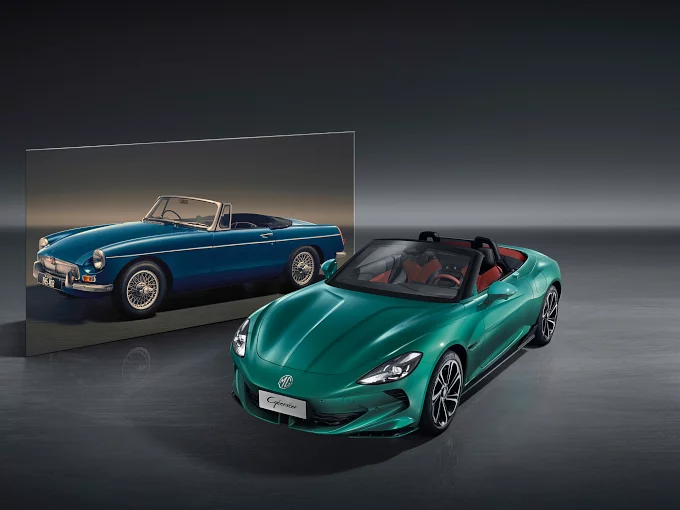
MG has been part of this shift. The brand draws on a century-long history of British automotive design, dating back to its founding in 1924, which it combines with the manufacturing scale and R&D resources of SAIC Motor, one of China's largest automotive groups. This combination has allowed MG to expand its range from
value-focused models to vehicles with more premium positioning across Qatar.
Chinese Automotive Statistics in Qatar and the GCC
The automotive landscape across Qatar and the wider GCC continues to shift, as Chinese automotive brands expand their regional presence. According to the China Passenger Car Association (CPCA), total exports to the region reached approximately 1.39 million units in 2025, representing around 17% of China's 8.32 million global exports.
Data compiled by the China Passenger Car Association (CPCA) shows the UAE as a significant driver of this growth, ranking as the third-largest recipient of Chinese vehicles globally with 567,000 units imported — a 70% increase year-on-year.
This growth is expected to continue. According to consulting firm AlixPartners, Chinese automotive brands are projected to hold roughly 34% of the Middle East and Africa market by 2030, up from around 10% in 2024.
Consumer sentiment reflects this shift: a CARMA Research Report found that 79% of drivers in Saudi Arabia hold a positive perception of Chinese brands, citing advanced technology as a key factor.
Within this landscape, MG Motor's Middle East Sales Report (2024) recorded over 70,000 regional sales and 29% year-on-year growth in the UAE, placing it among the region's fastest-growing automotive brands.
| Key Automotive GCC Market Statistics | Statistical Highlight |
|---|---|
| Total Chinese Car Exports to Middle East | 1.39 Million Units |
| Growth of Exports to the UAE | +70% Year-on-Year |
| Total MG Units Sold Regionally | 70,000+ Units |
| Projected Chinese Brand Market Share in MEA by 2030 | 34% |
| MG Sales Growth in the UAE | +29% |
| Positive Consumer Sentiment (KSA) | 79% |
GCC-Spec Engineering: What It Means for Reliability
For many buyers, the most important question about a Chinese car isn't styling - it's whether the vehicle can handle Gulf conditions. Temperatures across the region frequently exceed 50°C, placing significant demand on cooling systems, air conditioning and transmission fluids.
MG addresses this through “GCC Spec” engineering - vehicles undergo region-specific hot-weather testing, with attention paid to engine cooling systems and transmission durability under sustained thermal load.
Air conditioning performance is a related priority. MG has invested in higher-capacity compressors and airflow designs intended to cool the cabin quickly, including after a vehicle has been parked in direct sun. Alongside this, MG offers a 6-year or 200,000 km warranty (whichever comes first) across its lineup - one of MG's strongest differentiators regionally, and a meaningful factor for buyers concerned about long-term durability and resale value in a high-mileage, high-heat market. In a region where the sun doesn't do anyone any favours, that's not a small thing.
Where is MG Motor From, and What Is Its Country of Origin?
The name MG stands for Morris Garages, tracing back to the brand's founding in 1924 in Oxford, England. This history is a notable part of MG's identity, differentiating it within a market where many Chinese-owned brands are still establishing global recognition.
While MG's origins are British, its modern operations are shaped by SAIC Motor, whose scale gives MG access to substantial manufacturing resources and R&D investment. This combination allows MG to pair European design influences with more recent Chinese automotive technology across its GCC lineup.
Is MG a British or a Chinese Car Brand?
MG is a Chinese automotive brand owned by SAIC Motor, built on more than 100 years of British automotive heritage. Combining its rich legacy with SAIC Motor's global manufacturing scale, advanced engineering capabilities, and significant investment in research and development, MG continues to deliver vehicles that blend heritage, innovation, and value for customers around the world.
This combination is one of the ways MG differentiates itself in Qatar: British design heritage paired with Chinese engineering and manufacturing scale. For drivers in Qatar and across the Gulf, this means a vehicle with an international design lineage, built with the manufacturing scale and engineering resources SAIC brings to the table.
How MG Approaches Value and Differentiation in the GCC
Qatar's automotive market is one of the most competitive in the world. Within it, MG has focused its strategy on three areas: localised engineering, warranty coverage, and pricing that keeps advanced features accessible across its range.
By offering competitive pricing, MG aims to make features and technology available to a wider range of buyers, rather than reserving them for higher-end trims. This is combined with the GCC-spec engineering and warranty coverage outlined above, and a focus on the specific needs of GCC drivers.
Standard Features Across the Range
MG has differentiated itself by including a number of technology and safety features as standard across much of its range, rather than reserving them for higher trims. This is paired with an expanding after-sales network across Qatar, UAE and Saudi Arabia, intended to support long-term ownership.
Together, these choices reflect MG's positioning as a brand aiming to combine accessible pricing with a reasonably comprehensive standard specification.
British Design Heritage, Chinese Manufacturing Scale
MG's proposition combines over 100 years of British automotive heritage with SAIC Motor's world-class manufacturing, engineering expertise, and innovation. This is reflected across the range - from the sportier MG GT to the more premium MG RX9 - with a consistent focus on a dynamic driving feel and distinctive styling, alongside the connectivity features increasingly expected by Qatari and GCC buyers.
| Chinese Car Ownership Considerations | What This Means for Buyers |
|---|---|
| Competitive Pricing | Many features are included as standard rather than reserved for higher trims. |
| GCC Reliability | Engineering tested for extreme GCC heat. |
| Advanced Technology | Smart connectivity and Level 2 driver-assistance systems. |
| Warranty Coverage | Extended coverage (up to 6 years) from brands such as MG. |
| Local Support | Regional service networks and parts availability. |
| Electrified Options | A growing range of electric and hybrid models. |
MG's Model Lineup in Qatar
MG's Qatar lineup spans several segments, from compact city cars to a three-row flagship SUV. Whichever one catches your eye, it's worth a closer look before you decide. Below is a brief overview of the most popular models.
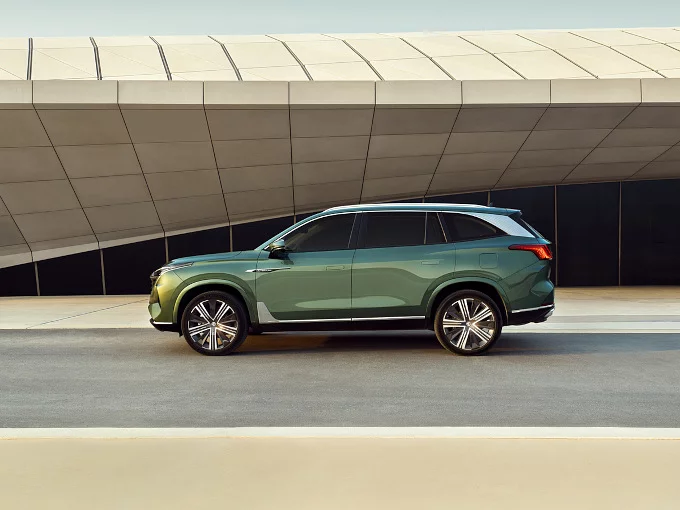
MG RX9
The MG RX9 is MG's flagship three-row SUV, aimed at buyers who need space without giving up technology. It includes a dual-screen interior, an AWD system, and climate control tuned for Qatar's heat. It's covered in more detail in MG's guide to the best 7-seater SUVs in Qatar.
MG ONE
The MG ONE combines everyday performance with smart technology. Its 1.5L turbocharged engine delivers 168 hp and 275 Nm of torque, while MG Pilot advanced driver-assistance features add confidence on busy city roads and highways. The intelligent digital cockpit, wireless charging, Apple CarPlay and Android Auto also make it well suited to connected everyday driving in Qatar.
MG ZS
The MG ZS offers the practicality and versatility of a compact SUV, with a 1.5-litre turbo engine, Smart CVT transmission, advanced ADAS features, and a comfortable, well-equipped cabin. It is a practical choice for everyday city driving and family journeys across Qatar.
MG 7
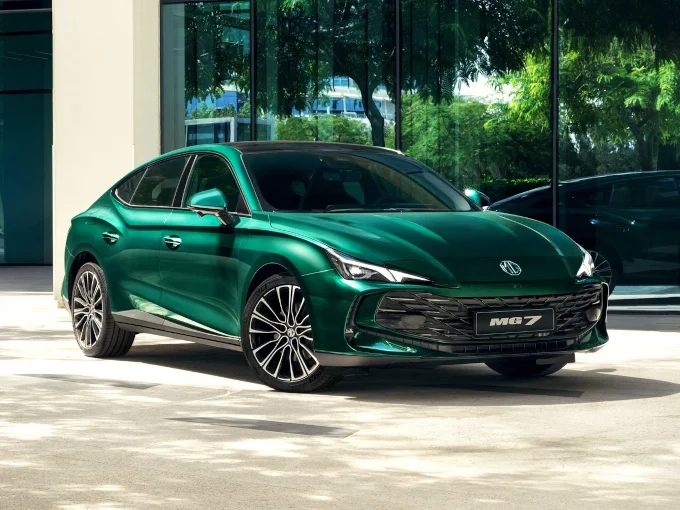
A fastback sports sedan aimed at buyers who want a sportier daily driver, the MG 7 features frameless doors, an adaptive rear spoiler, and a turbocharged powertrain, alongside a connectivity-focused interior.
MG 4 Electric
The MG 4 Electric is MG's entry point into the EV segment, built for urban commuting. It offers a rear-wheel-drive layout, multiple driving modes, and the MG Pilot driver-assistance suite.
MG 8 PHEV
The MG 8 PHEV in Qatar brings plug-in hybrid technology to the executive sedan segment, combining a 1.5-litre petrol engine with MG's DMH Super Hybrid system. With up to 125 km of pure electric range and a combined range of up to 1,655 km, it offers a refined and efficient option for both daily commutes and longer journeys.
MG HS
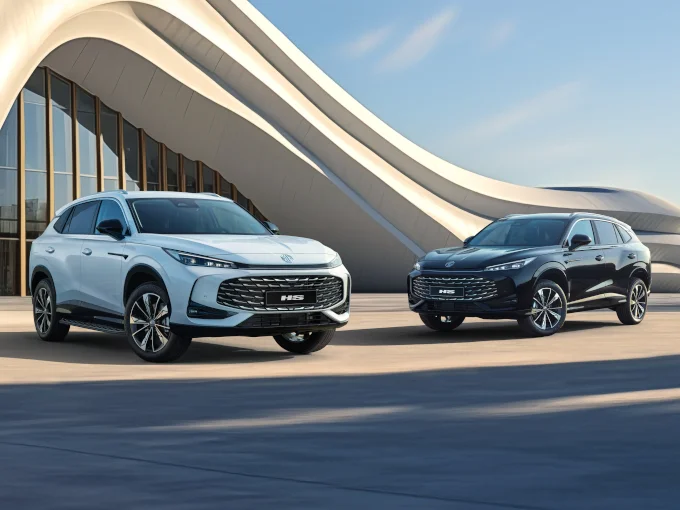
The MG HS is a mid-size SUV balancing family practicality with sportier styling, also available as the MG HS Hybrid+, which offers a combined range of up to 1,287 km. It includes a Level 2 ADAS system and holds a 5-star Euro NCAP safety rating.
MG 3
Built for first-time buyers and daily commuters, the MG 3 is a compact city car focused on fuel efficiency and affordability. It includes a touchscreen, smartphone integration, and MG's active safety features as standard.
MG GT
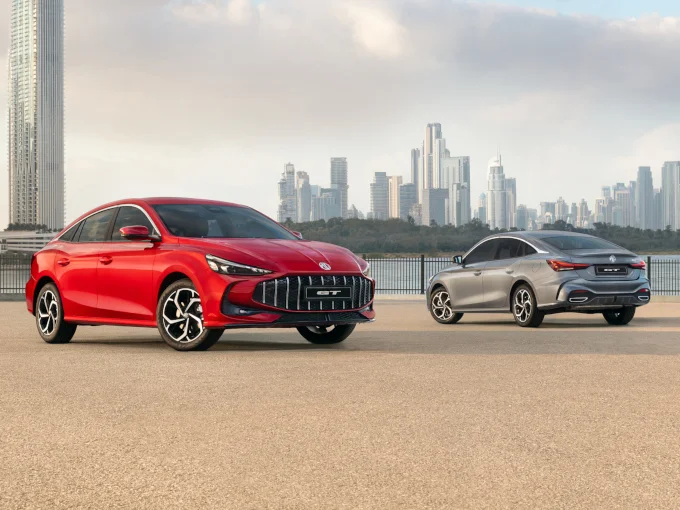
The MG GT is a fastback sports sedan offering a choice between a turbocharged engine and a more fuel-efficient variant. Standard features include a 360-degree camera and collision warning on premium trims.
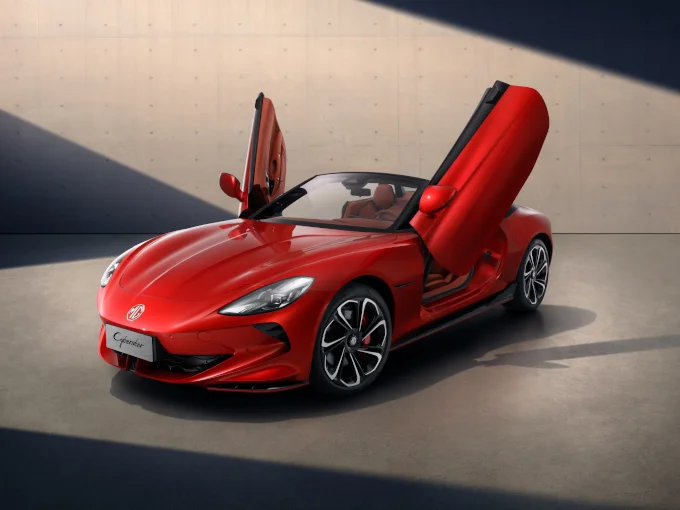
MG Cyberster
The MG Cyberster is MG's electric roadster, featuring scissor doors, a three-screen cockpit and an all-wheel-drive layout capable of 0-100 km/h in 3.2 seconds, alongside Brembo brakes and Bose audio.
Servicing and Spare Parts Availability
A common concern for buyers of Chinese cars in Qatar is spare parts availability and servicing quality. MG has built out a regional distribution and after-sales network to address this.
Through its partnership with Auto Class Cars, the authorised MG distributor in Qatar, MG Motor maintains service centres and regional parts distribution facilities. This is intended to reduce wait times for maintenance and parts compared with brands that rely on more limited regional infrastructure.
What the Future Holds
The momentum behind Chinese automotive brands in Qatar continues to build. With Qatar National Vision 2030 and the wider GCC's push toward cleaner mobility, New Energy Vehicles are expected to make up a growing share of the local market. Chinese manufacturers have invested heavily in battery technology, PHEV powertrains and EV pricing at scale, positioning them to benefit from this shift.
MG's current lineup reflects this direction, spanning the all-electric MG 4 Electric and MG Cyberster to the MG 8 PHEV. As Qatar's EV infrastructure continues to expand and buyers weigh technology alongside reliability, MG's position within this transition is likely to continue evolving. Whichever direction the region's roads take next, it's shaping up to be an interesting ride.
What to Consider When Choosing a Chinese Car in the GCC
For buyers across the GCC, Chinese automotive brands increasingly offer a competitive combination of technology, comfort and pricing. MG's approach has focused on GCC-spec engineering built for the region's climate, alongside a 6-year warranty and an expanding regional service network.
Whether MG or another Chinese brand is the right fit depends on individual priorities - segment, budget, and how much weight a buyer places on warranty length versus other factors. MG's combination of heritage, GCC-specific engineering and warranty coverage is one of the ways it has positioned itself within this growing segment.